
Hi folks, in this blog I’m going to look at another lens for Micro Four-Thirds sensor cameras that I use for underwater photography.
This time it’s one I’ve used continuously for longer than any other, the Panasonic Leica 45mm f2.8 macro (Full name: Panasonic Leica DG Macro-Elmarit 45mm F2.8 ASPH OIS)
The lens has been a favourite of mine since I tried it out with my Olympus EPL-3 camera in an Olympus housing on a Red Sea liveaboard way back in January 2013.
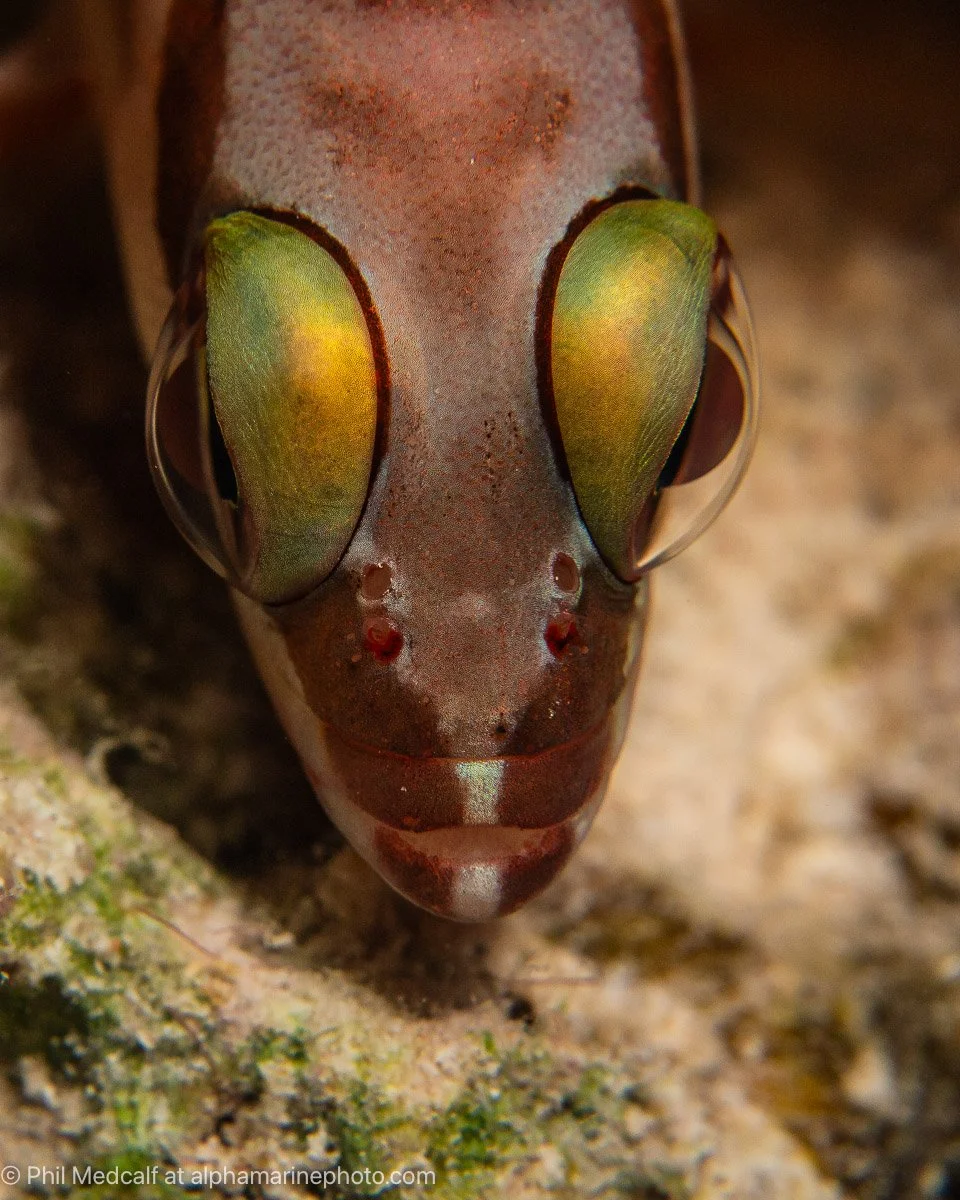
I took this image of a blacktip grouper on a night dive in the Red Sea the first time I used the 45mm macro lens. The sharpness and close focusing compared to my 14-42mm kit lens blew me away.
The Panasonic 45mm is a true macro lens giving 1:1 reproduction on the camera sensor if your subject is at the minimum focusing distance. Be aware that while the specs you’ll see say the minimum focusing distance is 15cm that is the distance from the subject to the focal plane of the camera. The closest working distance of the lens is about 6.5cm from subject to the lens front.
With the 2X crop factor of an M4/3 sensor the 45mm has the same field of view as a 90mm lens on a full frame sensor camera.
The lens has built-in optical image stabilisation which can be turned on and off. If you are using an Olympus, OM System or a newer Panasonic camera you’ll want to turn stabilisation off on the lens as the in camera stabilisation will do a better job.
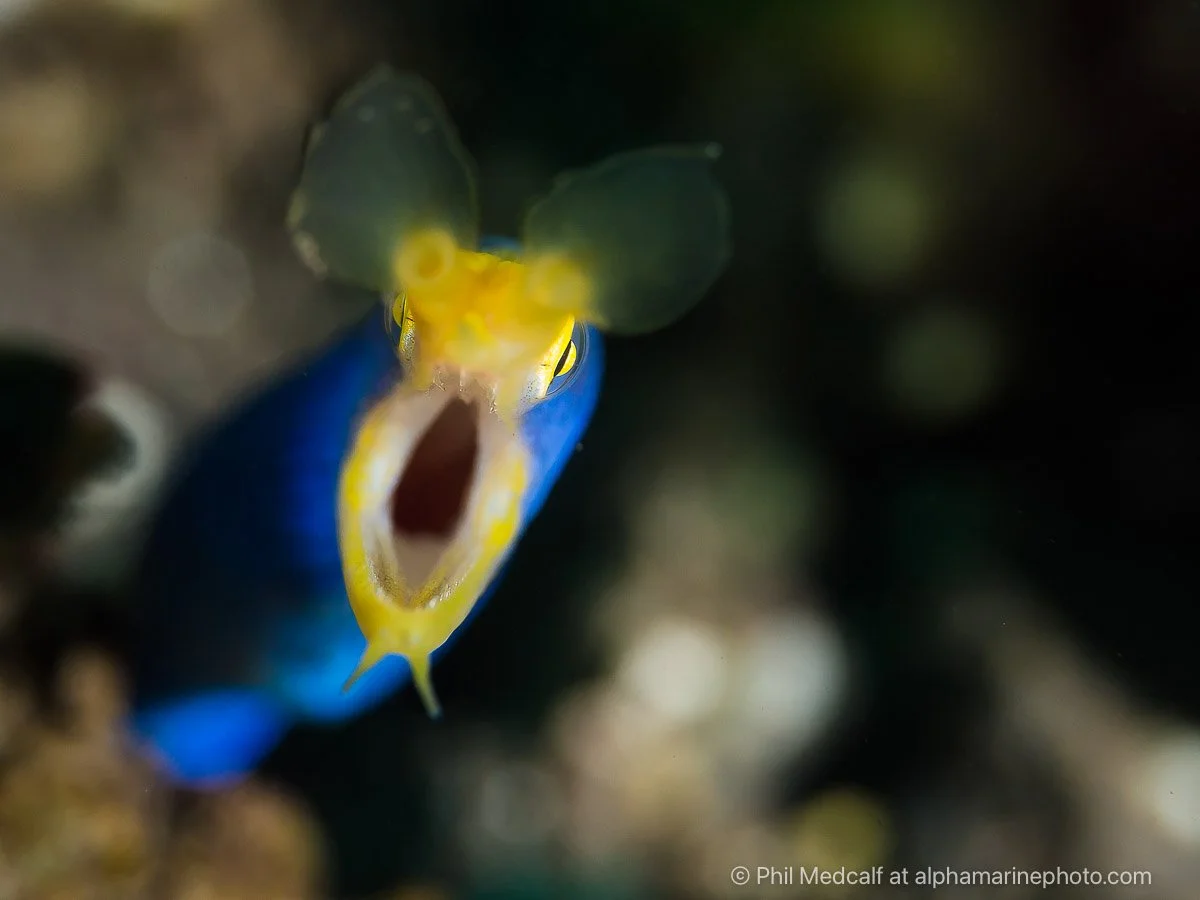
The aperture in the Panasonic 45mm has seven blades which make light spots show as heptagons in blurred backgrounds when the aperture isn’t wide open. This can be seen in this image of a ribbon eel taken at f/9.0.
There is another switch on the lens which changes the focusing range from 15cm-infinity to 50cm-infinity. This basically deactivates the macro function of the lens. I would recommend always keeping it set to the full 15cm to infinity for underwater photography as getting close is a priority.
What you will notice is that once you get within that 50cm focusing distance the light level will drop in your pictures and you may need to turn up your strobe or change exposure settings. That’s because the effective f value when using the macro function increases even though the nominal f value based on the physical aperture size and the lens focal length stays at what you set it.
If you have the aperture set to f2.8 you get an effective f number when you are at the 15cm minimum focusing distance of f5.6. In practice I don’t find this an issue as it’s just a matter of adjusting strobe power or moving them closer to compensate.
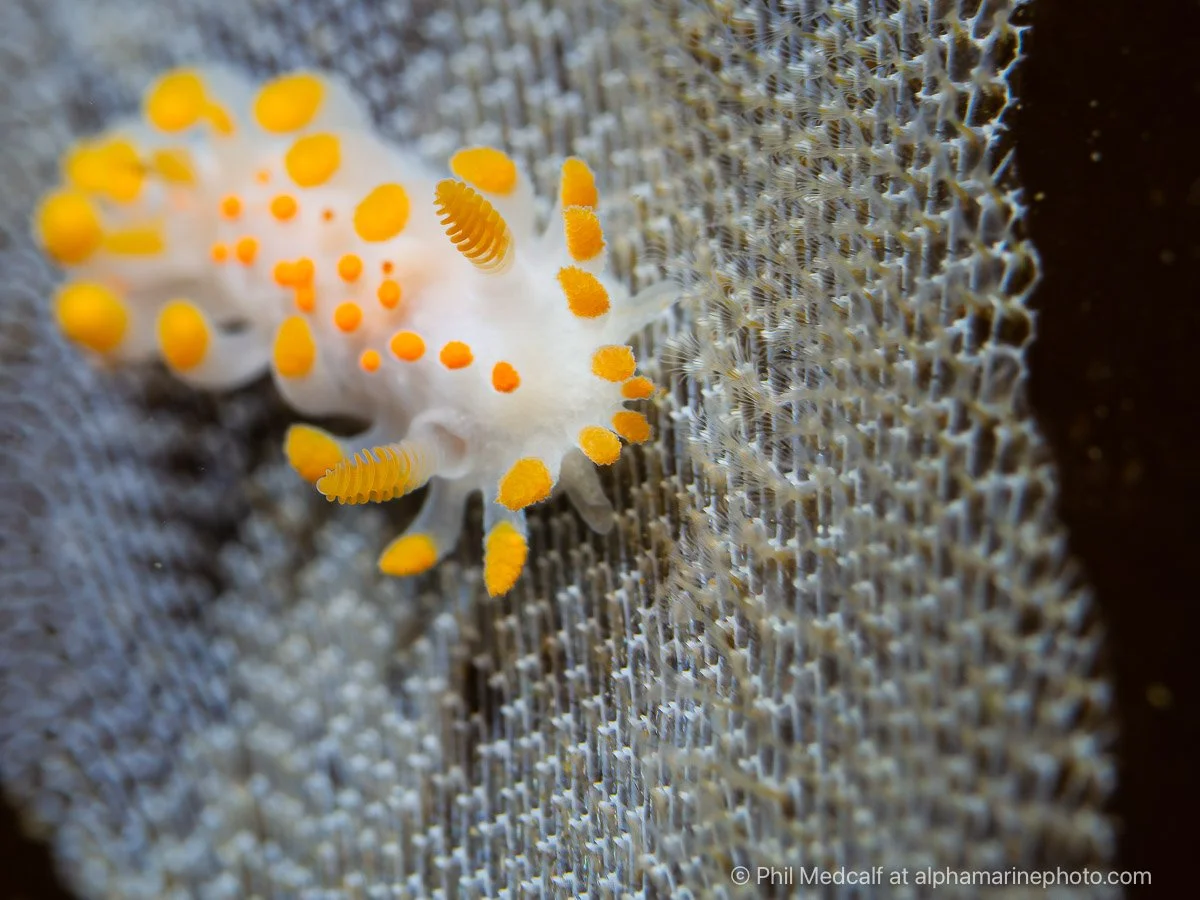
The 45mm works well with macro wet lenses such as the Nauticam CMC-1 & CMC-2 or the INON UCL-67 which was used to take this image of a nudibranch feeding on bryozoans in a Scottish sea loch.
In size the Panasonic 45mm is similar to the Olympus/OM 30mm. It has a diameter of 62.5mm and a length of 63mm. That means with most housing systems you can fit either lens in the same size port.
When it comes to weight there’s a big difference with the 45mm weighing 225g, nearly a 100g more than the OM 30mm. That higher weight reflects the presence of two control switches and optical image stabilisation along with twice as many lens elements (14 instead of 7).
I feel the 45mm gives the sharpest results of the three macro lenses I use, the others being the Olympus 30mm and 60mm. That said there isn’t a huge margin between them and using software based sharpening when processing will deal with any shortfall from the lens quality.
Auto focus can seem a bit slow and I’d probably put the Olympus 60mm ahead in that respect but it isn’t terrible as long as you have a reasonable amount of light.

While the Olympus/OM 60mm will give you a little more power for dealing with subjects further away from the camera and you’ll get a bit more magnification when using it with wet lenses, I’ll still go after the same subject matter when using either lens. In this case I used the 45mm with a Nauticam CMC-1 to get this picture of a skeleton shrimp during my workshop last year in Indonesia.
The 45mm f2.8 is built to last. I’m still using one that I bought 12 years ago and it’s one of my favourite lenses for underwater so it gets a lot of use.
But you pay a bit more for that quality as you’d probably expect for a lens with Leica on it. At time of writing Wex in the UK have it listed as a special order item for £587 and Amazon have them for £599. A used one will set you back at lot less. MPB have them from £284 in Excellent cosmetic condition which is cheaper than a used Olympus 60mm f2.8 macro lens even though they cost less new.
If you are thinking about adding a macro lens to your Micro Four-Thirds underwater photography setup and want something that can be used with wet lenses for an increase of magnification the Panasonic Leica 45mm f2.8 is worth considering.
It’s sharp, well made and if you are happy to buy used it’s reasonably priced.
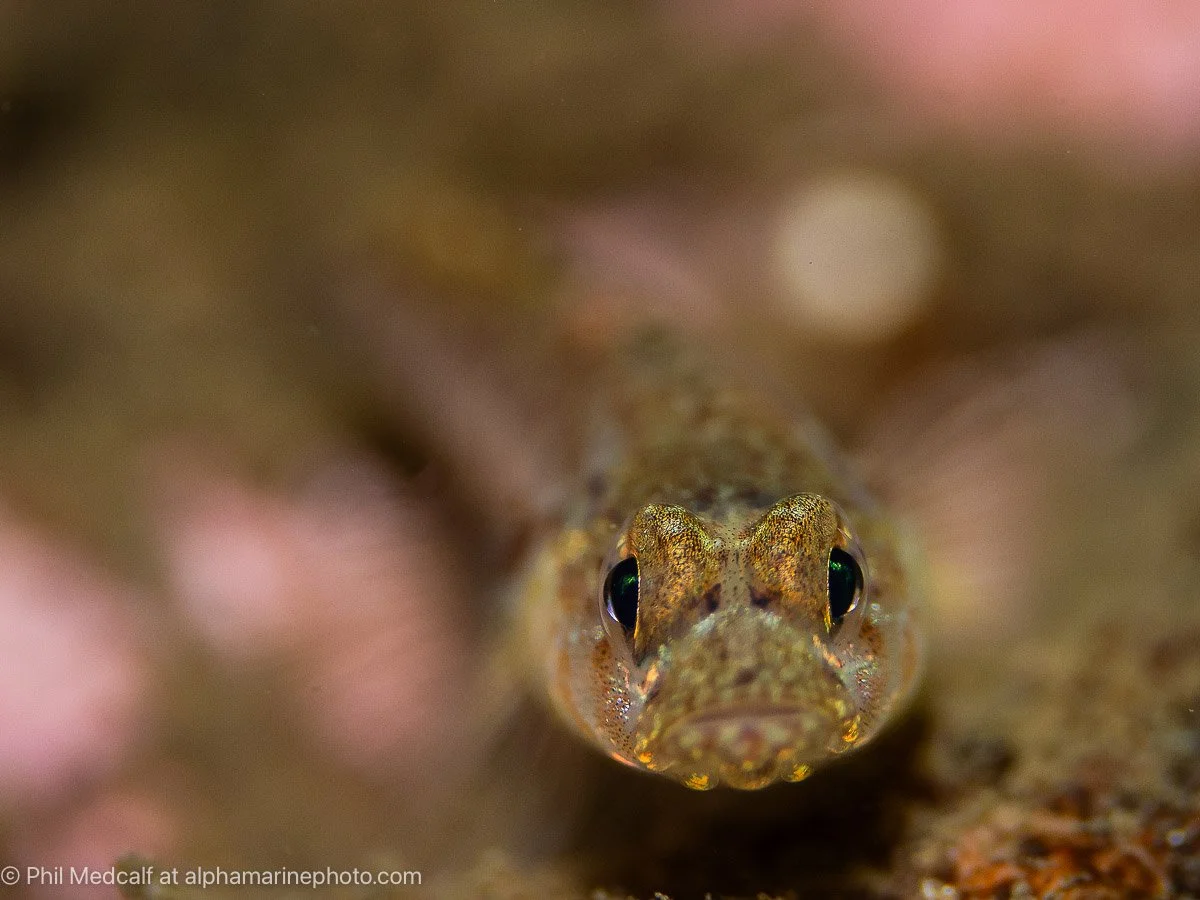
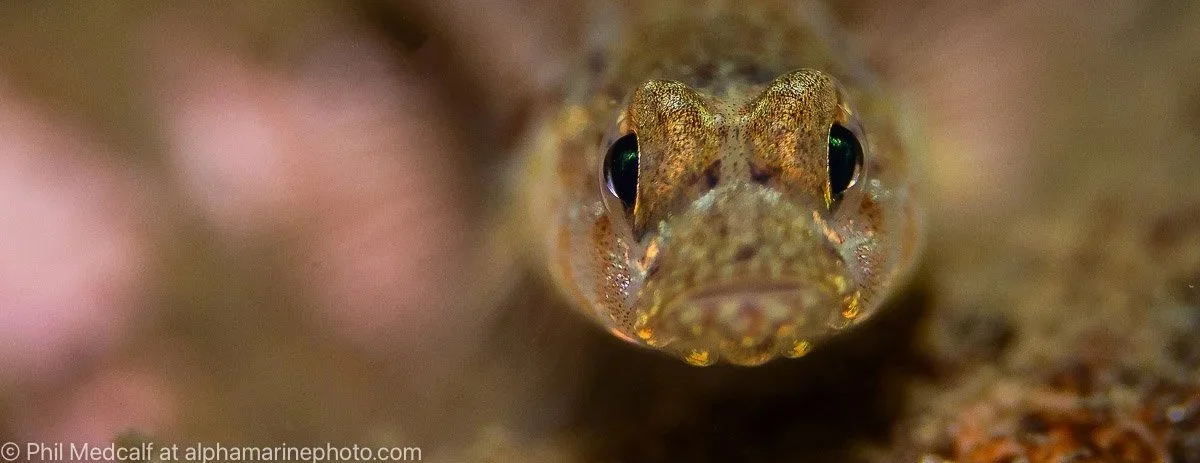
At f2.8 and close up you’ll get very nice shallow depth of field results with the Panasonic 45mm like this picture of a painted goby in Loch Inchard, Scotland
If you already have the Olympus 60mm and an appropriate port for that lens I’d recommend sticking with that. But if your current macro lens is a 30mm and you want something more capable without the cost of a new port the 45mm is worth considering.
One thing to be aware of is that Olympus/OM have a 45mm f1.8 lens in their range. That isn’t a macro lens but the Panasonic Leica 45mm will give you the same angle of view so you can use it for macro and the kind of portrait photography the OM 45mm suits as well. It’s just a bit less fast being an f2.8.
Thank you for reading this blog. If you found it helpful and would like to learn more about using your camera underwater I offer online courses specifically for mirrorless camera users and underwater photography workshops around the world. We’re also an equipment dealer for a wide range of underwater photography brands.
Email us with any enquiries at info@alphamarinephoto.com or use our contact form to get in touch and sign up to our newsletter.
We also run an underwater photography Q and A group on Facebook which anyone is welcome to join if they obey the rules.
If you found this article useful, but are not planning to buy equipment from us or do a workshop you can give us your support though our ‘buy me a coffee’ page. Be aware links to Amazon, MPB, Wex or eBay listings are affiliate links and we get a small percentage if you buy something through them.