
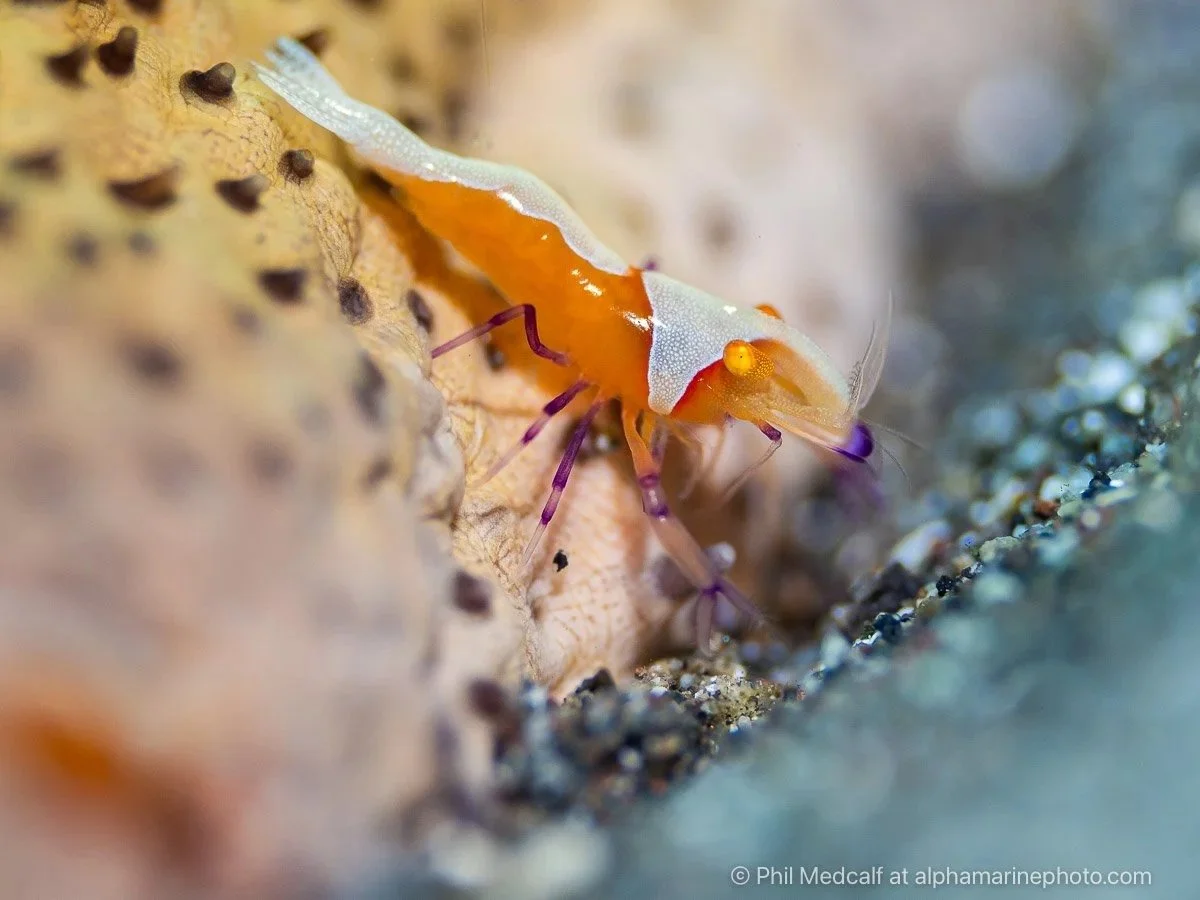
I thought for my latest blog I would cover the last of the trio of macro camera lenses I use with my Olympus and OM Micro-Four-Thirds (M4/3) mirrorless cameras. I’ve already looked at the Olympus/OM 30mm f3.5 and the Panasonic Leica 45mm f2.8 macro lenses in previous blogs.
The Olympus/OM System M. Zuiko Digital ED 60mm f2.8 is probably the most commonly used M4/3 macro lens for underwater. I started using one in 2018 after one of our pair of Panasonic 45mm macro lenses was damaged beyond repair.
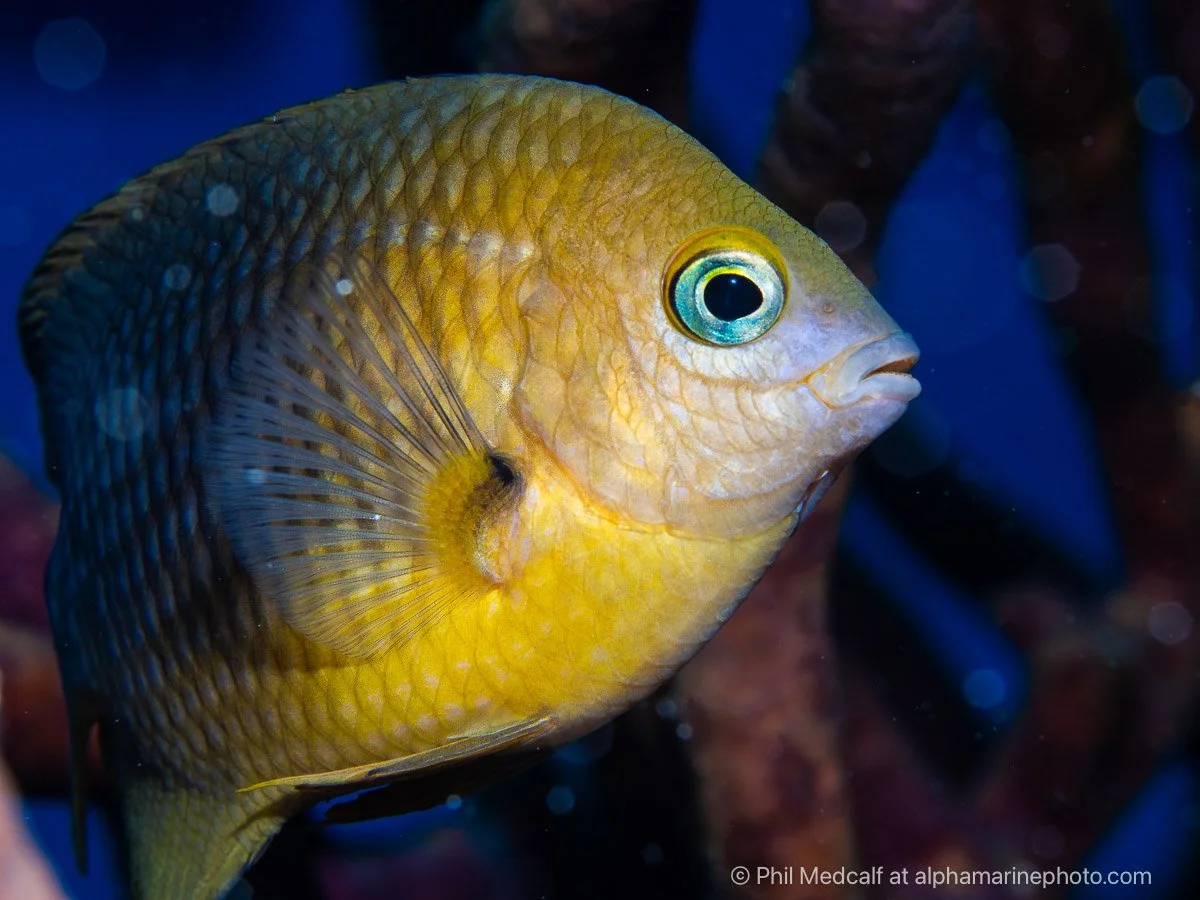
Focusing with the 60mm is generally pretty quick. In my view it’s a touch faster than the Panasonic 45mm macro and that makes it a better lens for fish portraits where there’s more subject movement than shooting macro critters like nudibranchs and shrimps.
The 60mm focal length on a Micro Four-Thirds gives the same field of view as a 120mm lens on a full frame camera. On its own you’ll get up to 1:1 reproduction on the camera sensor at the minimum focusing distance of 19cm.
The actual minimum working distance, the closest you can get to your subject and still focus measured from the front of the lens is about 8.2 cm.
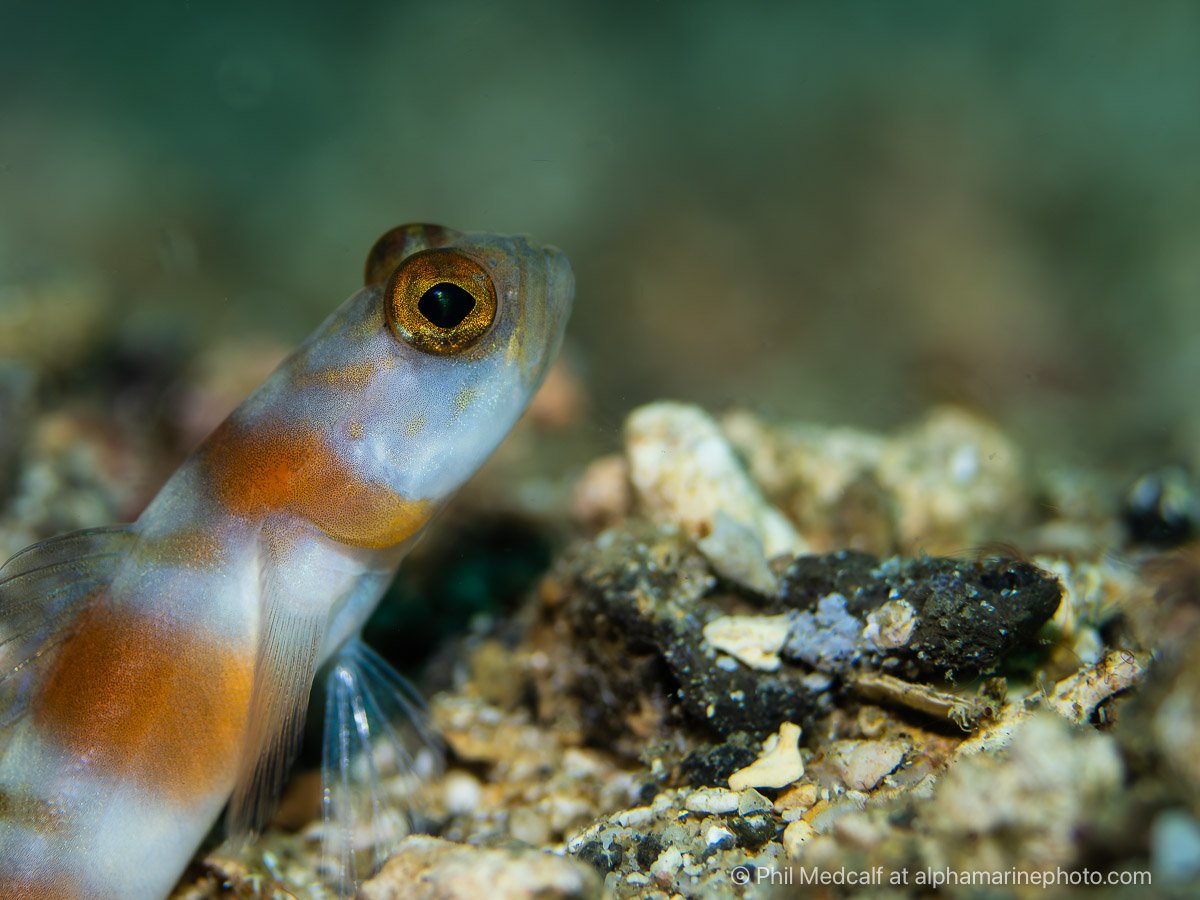
I find the extra reach that the 60mm gives over shorter focal length macro lenses is helpful when getting shots of more skittish marine life such as this shrimp-goby in the Lembeh Straits, Indonesia. This shot was taken with the aperture at f2.8 to help blur the background.
There is a control dial on the side of the lens which can be used to set the focus range limits. You can choose between 0.4m to ♾️ , 0.19m to ♾️ which is the complete focus range, 0.19m to 0.4m or a 1:1 setting.
The 1:1 setting on the dial basically locks the focus point at the minimum focusing distance so unless you get your subject at the 8.2cm working distance it won’t appear in focus. The dial does not stay with the mark lined up with the 1:1 it springs back to the 0.19-0.4m mark. You need to be using manual focus for this and as soon as you use auto focus this setting is cancelled and the lens reverts to the 0.19m to 0.4m setting.
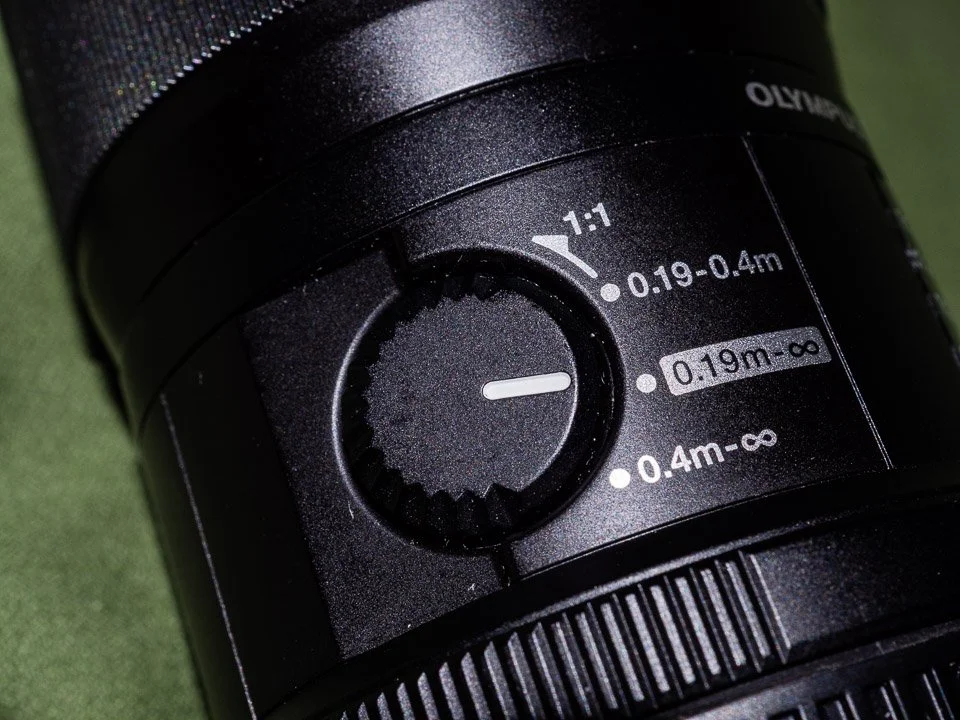
Because there aren’t any underwater housing ports available for the 60mm macro that allow you to operate the focus limiting dial while underwater I’d recommend leaving the focus range set to 0.19m to ♾️. This will give you scope to deal with subjects at any distance in case you want to switch for tiny stuff at short range to fish portraits or shots of critters that are too skittish to let you get with 0.4m.
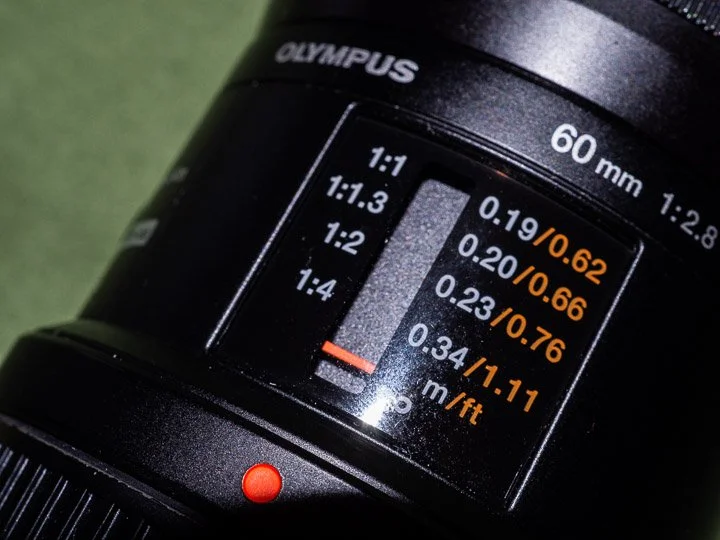
The lens does have scale showing what the focus point is set to but as with not being able to operate the dial when using it underwater you can’t see the scale either.
The 60mm is longer at 82mm compared to the Panasonic 45mm at 63mm which is why despite the minimum focusing distance being 19cm to the Panasonic’s 15cm the working distance is only about 1.7cm more.
The 60mm is lighter and slimmer than the Panasonic but it does have IPX-1 rated weather sealing unlike the OM 30mm macro. It was originally in a middle grouping of Olympus M.Zuiko lenses between the basic models and the Pro rated lenses which I think was called the Premium lenses That grouping seems to have disappeared from the newer lens charts despite the lenses still being around.
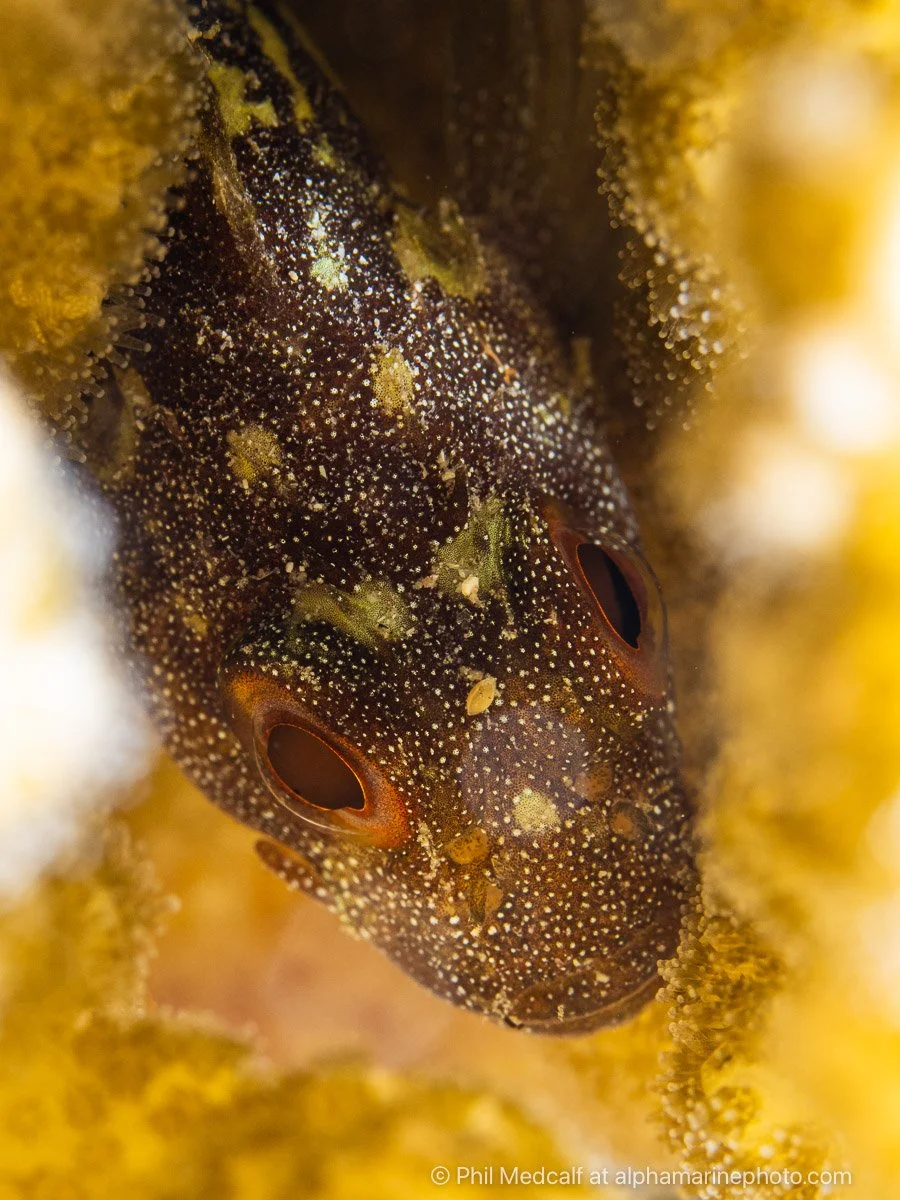
A longer minimum working distance means you’ll be a bit further away from your subject when you reach the point when you can’t focus on it. That can be helpful in preventing you getting too close and touching your subject or its surroundings. In the case of this yellow-spotted scorpionfish hidden well inside a branching coral getting too close may well have resulted in damaged coral and a scratched housing port.
At time of writing the OM 60mm f2.8 will cost you around £499 to buy new if there isn’t an offer running on it (at time of writing its £449 from WEX). A used one in Excellent cosmetic condition would cost £334 from MPB.
Macro wet lenses work particularly well with the 60mm . the extra bit of working distance over the 45mm gives you a bit more room between you and the subject. If you are looking at Nauticam macro wet lenses the 60mm sits in a middle ground where both the CMC and SMC lenses can in theory be used but considering the SMCs are more expensive I’d recommend going for the CMCs.
INON’s range of lenses such as the UCL-67 are great with the 60mm as well.
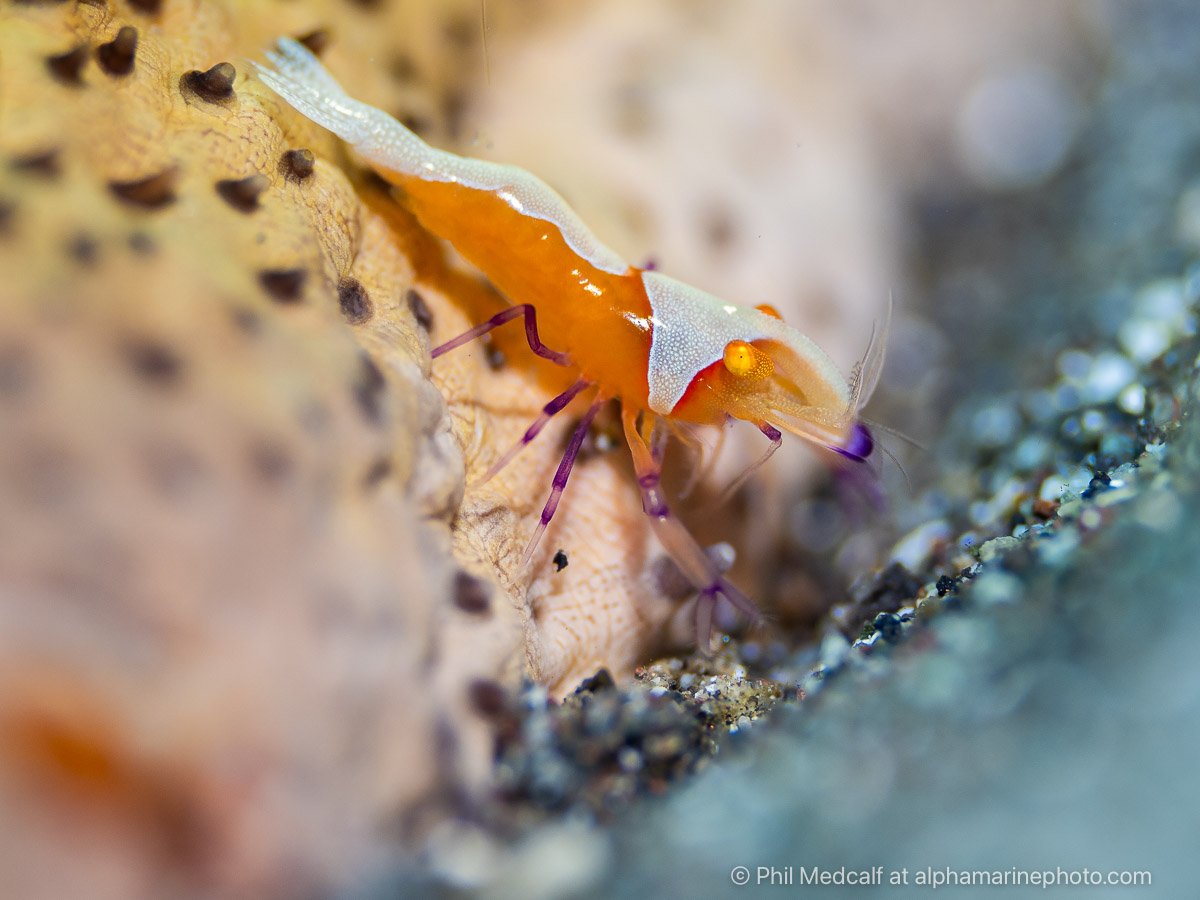
Nauticam’s MFO-1 (Mid-Range Focus Optimiser) wet lens works very well with the 60mm, giving a slight increase magnification combined with faster focusing in some situations and the excellent sharpness to the edge of images that the other Nauticam wet lenses provide.
Like the Panasonic 45mm you do lose some light when you get close to your subject. Starting from 0.34m focusing distance where you get 1:4 reproduction the light reaching the sensor at maximum aperture equates to a higher f number than 2.8 and that increases as you get closer. At 19cm focusing distance the effective aperture is f5.6 instead of f2.8.
If you have a Nauticam housing for your M4/3 camera and want to use the Olympus/OM 60mm macro lens you can either use the N85 Macro Port 65 (£332) or if like me you already have the N85 Macro Port 45 (£361) to use the 45mm Panasonic or 30mm Olympus/OM macro lenses you can add a 20mm Extension ring (£224).
There is a Nauticam focus gear available for using the 60mm on Manual focus but it is £166 and in my experience auto focus does a good job in most situations.
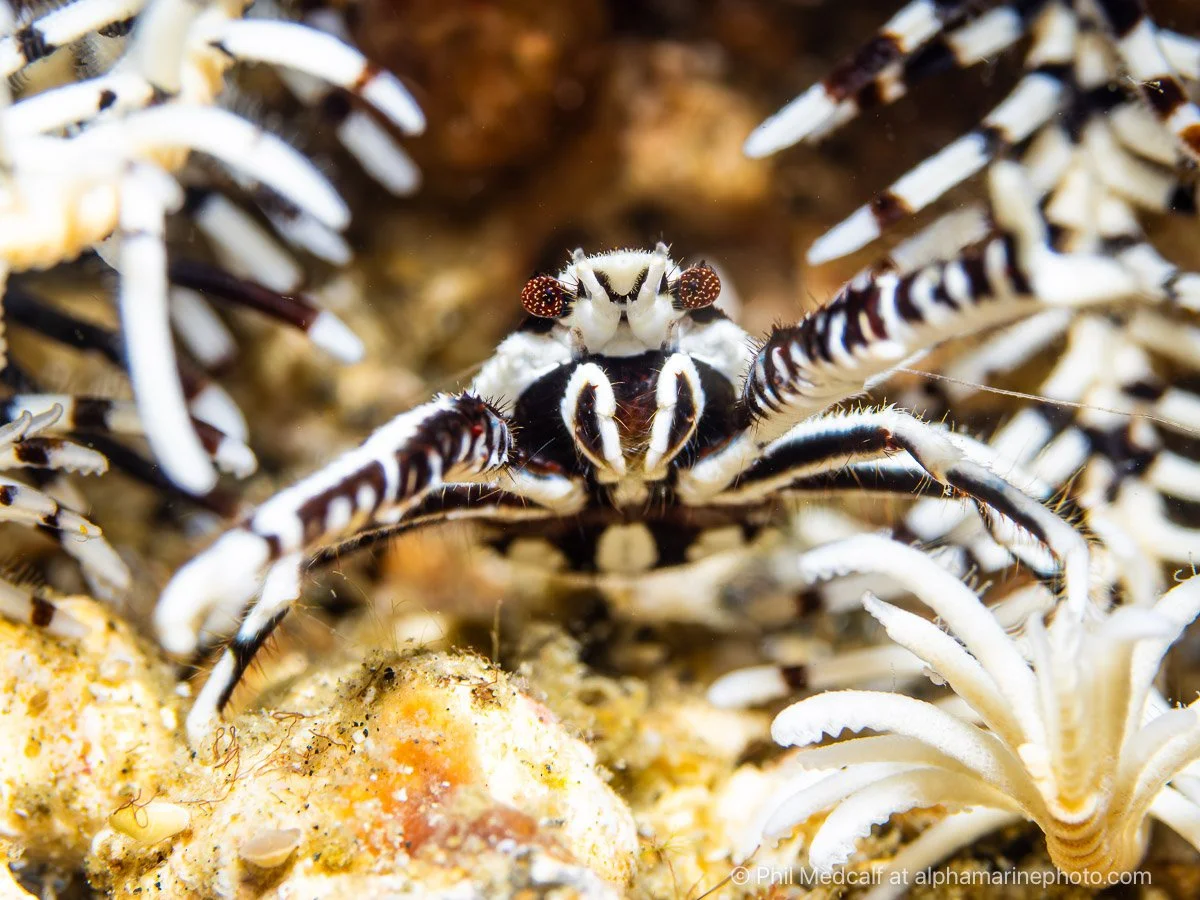
The flat ports for the 60mm made by Nauticam and AOI have 67mm screw threads which allow fitting of macro wet lenses such as the Nauticam cMC-1 that I used to take this picture of a crinoid squat lobster. They also support bayonet mount systems by Nauticam, AOI and INON.
If you have an AOI or Olympus housing you can use the AOI FLP-02P (£165) if you have a housing using the PEN port system or if you have the AD LP-01 adapter (£139) for the OMD port system. If you don’t have the adapter for the OMD ports you can buy the FLP-03P port which is a set with the adapter and FLP-02P. (£229).
It’s also possible to adapt a couple of the shorter AOI ports the FLP-04 and FLP-06 using extension rings. If you have one of those already and would like the details of which extension rings you need drop me an email.
My opinion of the Olympus/OM 60mm f2.8 macro lens is that it’s fast focusing compared to the other lenses in its size and price range. The build quality is good while it’s lighter and cheaper than its closest competitor the Panasonic 45mm f2.8.
The longer focal length gives you a bit more reach when you either can’t or don’t want to get close and the longer working distance helps when you add macro wet lenses.
If you are only going to buy one macro lens to use with your Micro Four-Thirds camera it’s the best choice for most situations.
There is the OM 90mm Pro macro lens as well. I’ve used one a few times and it’s a great lens giving masses of magnification with an S-Macro setting that gives x2.2 magnification before you even add wet lenses or a teleconverter. But I’m not sure I will ever buy one for myself because it is a much larger lens and the £1149 price tag plus £477 for the specific Nauticam port is quite a lot.
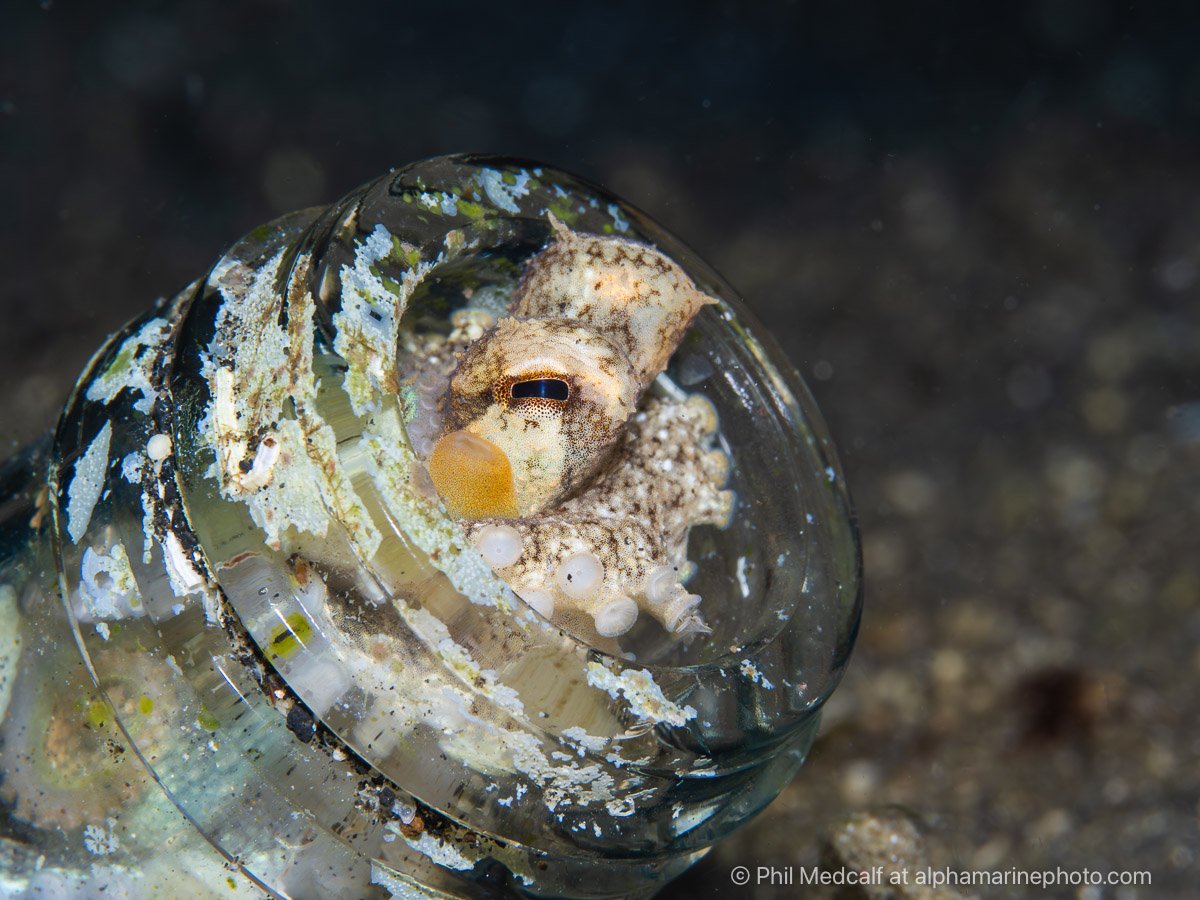
This shot of a coconut octopus in a bottle was taken using the OM 90mm Pro macro lens which was kindly lent to me by Karen, one of my Lembeh workshop attendees.
Thank you for reading this blog. If you found it helpful and would like to learn more about using your camera underwater I offer online courses specifically for mirrorless camera users and underwater photography workshops around the world. We’re also an equipment dealer for a wide range of underwater photography brands including Nauticam, INON and AOI.
Email us with any enquiries at info@alphamarinephoto.com or use our contact form to get in touch and sign up to our newsletter.
We also run an underwater photography Q and A group on Facebook which anyone is welcome to join if they obey the rules.
If you found this article useful, but are not planning to buy equipment from us or do a workshop you can give us your support though our ‘buy me a coffee’ page. Be aware links to Amazon, MPB, Wex or eBay listings are affiliate links and we get a small percentage if you buy something through them.